I built my own little RAG (Retrieval Augmented Generation) app leveraging my blog’s contents. It’s embedded below – try it out! I’d love a comment about how it worked for you.
Continue readingBuilding Trust in the Age of AI
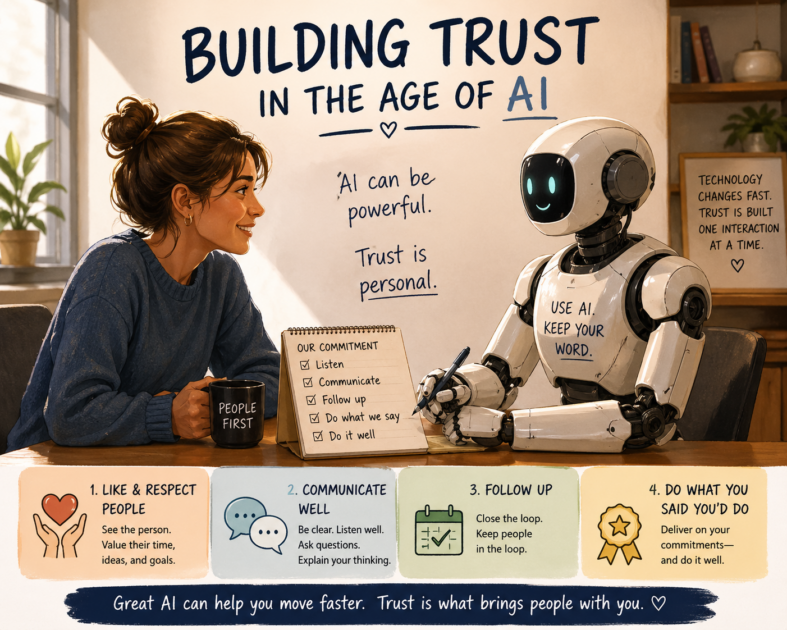
Being trusted by your colleagues and clients has always been important.
In this “age of AI”, people and relationships still matter.
Trust is what differentiates one product manager from another. Trust is what gets someone assigned an important task, gets them a wider scope of work, gets them a promotion or a job referral.
Here are some areas to consider when looking to build trust with your team and beyond.
Continue reading
Launching Analytics (and other) Tools in a B2B SaaS, Parts 2 & 3
Parts 2 and 3 are Implementation and Rollout. Check out Part 1, Internal Buy-In & Analysis
Part 2: Implementation
Determine what work needs to be done
What does implementation look like? Read (or at least skim) the implementation guide. Determine what you need to do before anyone implements the work.
A common item to figure out for both analytics and feature flag software: what metadata do you need? For example, will you want to analyze (or turn on feature flags) based on user permission? Based on state, or subscription type? Etc.
Figure out who will do the work and align on requirements
Continue reading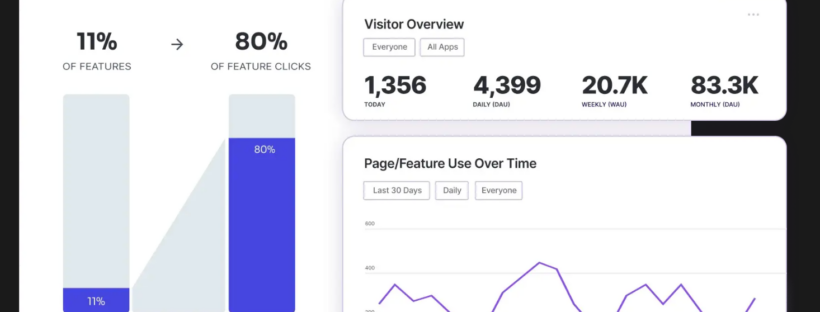
Launching Analytics (and other) Tools in a B2B SaaS, Part 1
I have initiated and led the launch of Pendo twice in the last year or so, at two different mid-size B2B SaaS companies. At my previous company, I also led the standardization of MixPanel labels, and helped roll out Posthog and LaunchDarkly. The last of those is a feature flag tool, not an analytics tool, but the steps are very similar.
If you’re interested in bringing a tool like this to your company, then this article is for you.
I’ve broken it down into three parts:
- Part 1: Internal Buy-In & Analysis
- Part 2: Implementation
- Part 3: Rollout
This article contains part 1; parts 2 & 3 have been released in a follow-up article.
Part 1: Internal Buy-In & Analysis
Start with your manager, and see if there’s any interest in the tool you’d like to bring on
If your manager says spending is frozen for the year, all of the analysis and data in the world (likely) won’t help.
Assuming there’s at least the possibility that this could happen…
Continue reading
Lessons From My First In-House Product Role
As I start a new job tomorrow at ChampTitles, I took some time to reflect on what I learned at Patriot Software over the last 5 years.
I was struck by how different my experience was at an in-house company, versus my previous 11+ years at agencies.
While I was in a different role at agencies – UX, rather than product management – my time at Patriot Software showed me there are unique advantages to being in-house.
Continue reading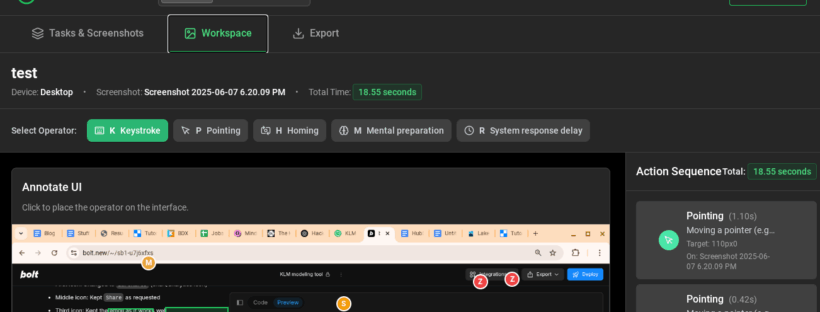
Building with AI: Getting Started with Bolt.new and v0
I was talking to a junior dev the other week. I kept asking them to remove this duplicate status in one part of the app, and the dev kept sending the app back to me with the same duplicate in place – frustrating! We talked about it, and the dev explained their plan to fix the issue, once and for all.
I asked: “why wrap this div in a conditional render, instead of getting rid of it? To clarify, there is a second div, with class flex items-center space-x-2, that also displays the status, that works just fine and I’d like to keep.”
The dev explained “The reason for conditionally rendering the div with the class inline-flex items-center px-2 py-1 rounded-full text-xs font-medium (which I’ll refer to as the “status badge”) instead of removing it entirely is to maintain its utility when a task is completed.”
I said “Let’s just get rid of the ‘status’ idea” and finally, the problem was solved!
At around the same time, I was working with a junior designer. When I suggested we try a change in design – from boring blue-on-white to green-on-black – there were a LOT of accessibility problems at first! And too many of the calls-to-action were primary. But after some additional feedback, they got their act together, and it’s looking pretty good now.
Continue reading
Do’s, Don’ts, and Personal Pet Peeves of Product Manager Resumes
Looking back on my time as head of product management at Patriot Software, I reviewed more than 1,000 resumes while hiring over half a dozen product managers at Patriot Software.
Some resumes stood out with clear, compelling storytelling and measurable impact. Others had vague descriptions, fluff, or outright mistakes.
A great product manager resume isn’t just a list of responsibilities or numbers; it’s a story. Getting it right can mean the difference between landing an interview or getting overlooked.
After seeing the best and worst of PM applications, I’m sharing my do’s, don’ts, and personal pet peeves to help your resume stand out.
Continue readingEncouraging a Product Management Team to use AI
You’ve likely seen countless articles on why AI is transformative, and you’ve read about the various and sundry LLMs that are out there.
This article takes a different approach: how do you actually get your product management team to consistently use AI to help level up your team?
While I don’t claim to have cracked this nut entirely, it is something that I’ve worked on, and thought it would be helpful to share with other product people interested in bringing AI to their teams.
Continue reading
Product Management Career Day: An Adventure in Teaching Kids
Last Wednesday was ‘career day’ at my fifth grade daughter’s school. They’d asked any parents with “interesting” careers to volunteer; figuring that product management should count, I signed up.
I had thought that it would only be fifth graders that I’d be teaching; they told me that there would be 5 classes, and that I’d be in the same room the whole time. With about ~20 kids per class, for 2.5 hrs, it sounded difficult, but doable. That’s what I thought, anyway…
Surprise! Teach the WHOLE School!
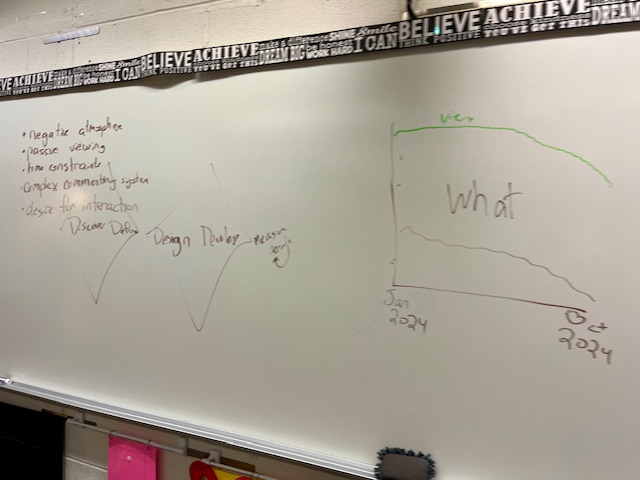
When I got there, it turned out to be 6 classes, for all of the grades – that’s 3rd through 5th at my daughter’s school – with 40+ kids per class! Each class was in a different room, and the schedule they gave me was less than accurate in terms of which room I was supposed to be in. In the last room, there wasn’t even a computer, so I did the presentation with a whiteboard (that was probably my best class, actually!)
While it was an exhausting experience, it was also a rewarding one. I’m sharing more about that experience in case anyone else is doing a ‘product management career day,’ and wants to use any of what I put together for the kids.
Continue reading“Go Real” for your Community of Practice
I was inspired by what I read in Lenny’s Newsletter about how Miro builds product: “You know how a picture is worth a thousand words—similarly, real examples of high quality are a lot more powerful, and simple at the same time.”
Varun Parmar, the CPO at Miro, was talking about design, but I thought, “What if we applied the same idea to product?”
Continue readingMetrics Sharing at a PM Community of Practice
As part of our Product Management Community of Practice, we regularly share metrics.
We experimented with a few ways this could work.
At one point, it was anything goes:
- Data to help make a decision
- Pre-shaping opportunity estimate
- Team dashboard
- ROI estimate
- Ongoing project goal metric
- Post-launch metric
They also talked about where they were having challenges and got input from the group, such as knowing what they wanted to measure for their project, but not being sure how to measure that information.
Continue reading
‘Try It Out’ with Your Community of Practice
When striving to make a Community of Practice or Book Club more engaging, there’s nothing quite like getting the team to actually try out the method that they’ve just read about. It’s also one of the best ways to help cement what everyone has just read (or listened/watched).
Continue reading